We're excited to launch a permanent collection of stories for our community to share.
Give $100 today in honor of our 100,000th camper! 💚 Interested in Kesem programs? Fill out our interest form to learn more.



For 25 years, Kesem has supported children facing a parent’s cancer through free, year-round programs and a lifelong community, led by dedicated college student volunteers. To mark the 25th anniversary, we’re catching up with former campers and student leaders to reflect on how their Kesem experiences continue to shape their lives, something we call the “invisible thread” of Kesem.
“Because of Kesem, I learned how to hold joy and responsibility at the same time — and I built a life and career centered on making sure people feel supported and less alone in the hardest chapters of their lives.”
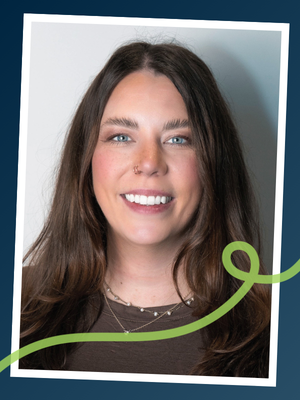
Meg “Ketchup” Hopkins hates ketchup, but loves Kesem. Today she carries the invisible thread as a team member on the Oncology Patient Solutions and Alliances team at Pfizer, and remains connected to the Kesem mission in new ways. She first got involved in 2015 at Kesem’s UNC chapter as some of her other college activities were winding down and a friend invited her to join the chapter. The mission resonated right away. When Meg was in high school, her dad was very sick with an undiagnosed debilitating illness. Meg felt like she had to grow up quickly and sees it as a pivotal moment that skyrocketed her maturity in a way that kids shouldn't have to go through. “Cancer is a different story, but there are similarities,” she shared.
Meg remembers what Kesem kids know all too well, that no one else understood what she was going through. “I had one other friend whose mom was really sick in high school. People would say, ‘we understand.’” Meg and her friend would think, “no, you don't.” In Kesem, Meg saw exactly what she wished she had had in her situation. “It’s such a beautiful organization. Not only do these kids get to be kids again, they also have a community of people that understands what they're going through.”
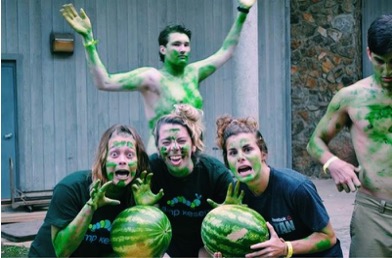
Meg was a counselor for two years and found a real calling. “We were all so focused on everyone having an amazing experience, and none of the kids were sitting around. I would carry cards, dice, even a Frisbee, so I could throw it to someone and we’d start playing.” The dedication of counselors like Meg is what sets Kesem apart - it’s a week of pure joy and fun for kids who don’t always have that in their daily life at home.
One of Meg’s most memorable experiences as a counselor was in 2016 when she worked with 14 and 15 year olds. “I loved working with that group of kids because it was the same age I was when I was going through my dad’s illness. I really resonated with them, remembering being a teenager and you're trying to be cool, but also deal with these really sensitive things. At that age, you want to act like you have it all together because it's this very formative age of being the cool kid.” Meg’s own experience helped her connect with these campers and give them space to be themselves.
“As I was deciding on a research concentration when I got to grad school, I thought I wanted to get into infectious disease. Then I took a cancer epidemiology class and I thought, wait, this all makes sense. This is how can I help my Kesem campers beyond camp, and impact their lives for more than just one week a year. That’s how I got into oncology.”
In 2018, Meg was accepted at Boston University’s School of Public Health, and continued to serve Kesem as an alumni advisor for BU’s new chapter that year. “I didn’t really know what I wanted to research, but I wanted to stay involved in Kesem.” As part of her graduate program Meg was required to do a practicum. She did hers… with Kesem! Meg worked with Kesem staff to flesh out an analysis Kesem had done on the diversity of camp, pinpointing ways to make camp more accessible to more families and build an understanding of why underrepresented populations were not showing up to camp. “For example, yes, camp is free, but you have to buy a sleeping bag and a lot of people can’t afford that,” Meg shared.
“This project really reinforced my degree; I have to be thinking about these things in public health.” Meg draws a direct connection from this work to what she learned about adverse childhood experiences, or ACEs. “Every time you have an ACE event—a parent passes away, a parent has an addiction—your risk for chronic disease goes up. So if you have five or six ACEs, your likelihood of getting heart disease later in life is much higher.” In Kesem, Meg sees an impactful response to the effects of ACEs. “Kesem is one of those implementation programs that can mitigate the impact of that ACE.” Meg’s work was an early precursor to a 2026 study from Georgetown University’s Lombardi Comprehensive Cancer Center, which showed through research-backed evidence that Kesem programs improve well-being and resilience in children impacted by a parent’s cancer.
During and after grad school at BU, Meg continued her work and research in these intersections of public health and racial and gender equity in cancer treatment and care. From racial disparities in preventative care for women with high risk factors for breast cancer, to quality of life studies with men who had prostate cancer, her work spanned a range of topics and institutions, with time at Massachusetts General Hospital and Memorial Sloan Kettering Cancer Center. “I really started to understand that you have to treat the whole patient. The patient is not just their cancer.”
This realization led Meg to her current role, on the Oncology Patient Solutions and Alliances team at Pfizer. “We focus on field reimbursement, advocacy, patient solutions, and health equity. All four of these arms are focused on helping the patient in the final mile of receiving their treatment. So, if their cancer care team prescribes them a treatment, how do we address barriers they may face in getting their prescription, how do we center our science on patients and how do we strive towards addressing inequities in access?” Again, Meg’s work requires a high-level view of the gaps and barriers she has always been passionate about addressing. “Systems have been put in place in our world that might prevent people from getting our medicines, like health insurance, Medicare, Medicaid, rural access, etcetera. How are we filling the gaps and continuing to treat the whole patient?”
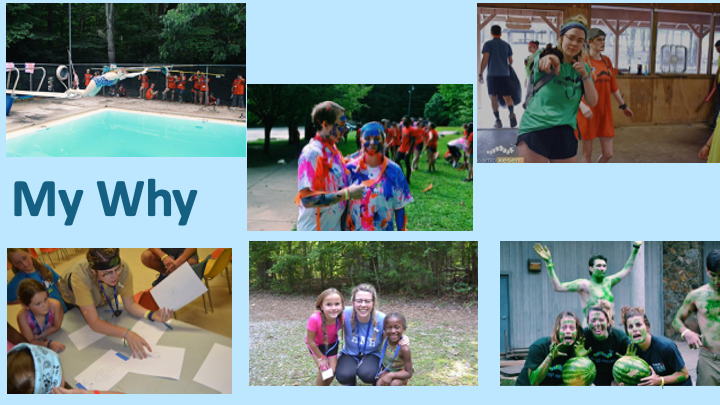
At Pfizer, Meg also found a new chapter in her Kesem story. Meg’s experiences with Kesem have made her a passionate supporter of the mission and she enjoys helping people in her network understand the important role they play in supporting kids and families impacted by cancer. For the team’s first meeting of 2026, each person was asked to prepare a slide to share their “why.” Meg’s was all Kesem photos. “I got to explain how Kesem really informed why I'm here right now in this room at Pfizer.”
Meg stays connected to Kesem personally too. “I have so many Kesem friends that still live near me in New York and we hang out all the time. We still call each other by our Kesem names - they're in my phone as “Marshmallow, Hoof, Duvet, Hoagie, and Foam. They are some of my best friends in life.”
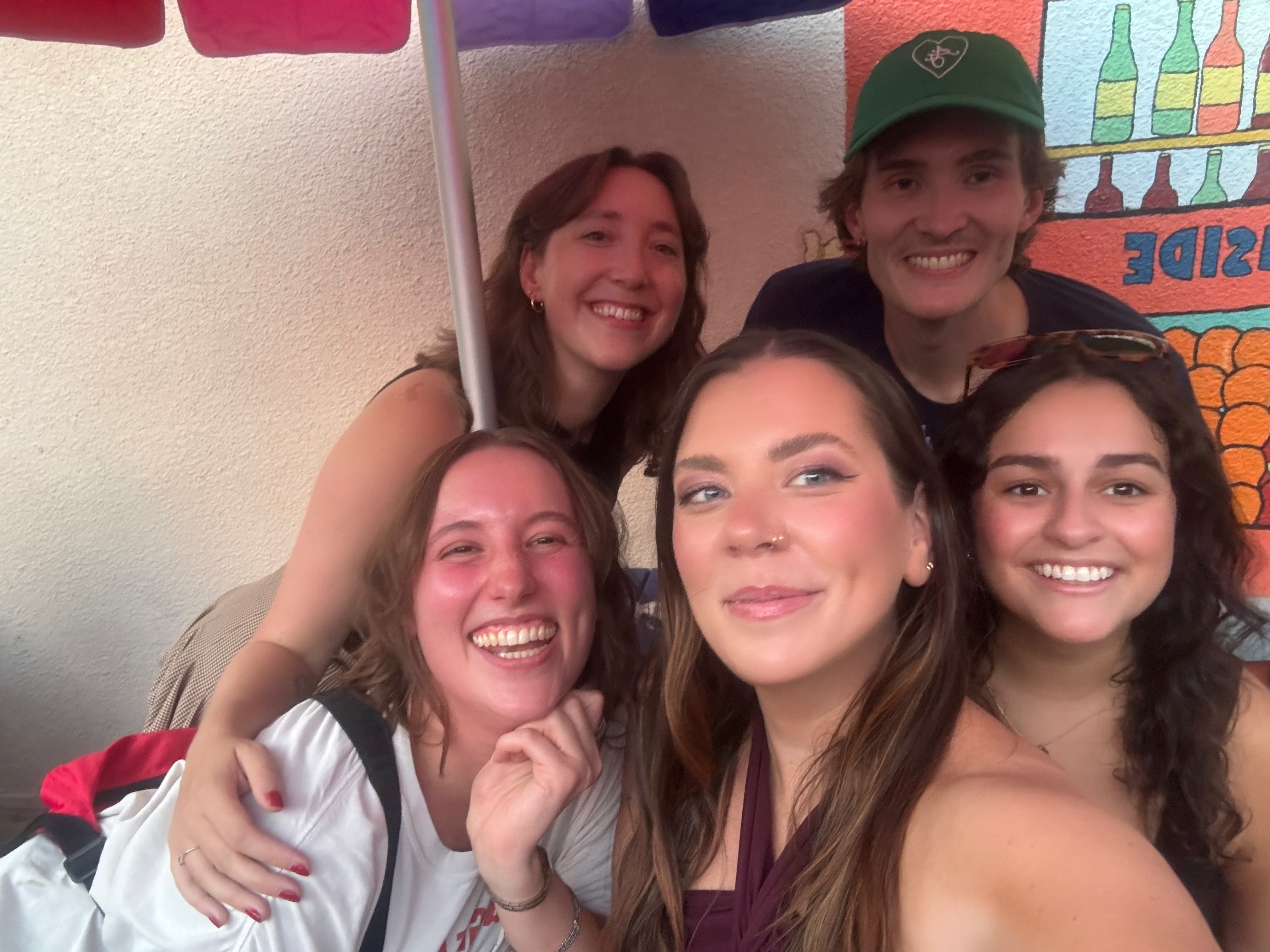
It’s that counselor's commitment to making fun and joy wherever you go that makes these friendships special, even into adult life. This is one of the biggest lessons Meg still carries from Kesem. “We don't have to be so serious all the time. I want to be able to control the things that I can control and one of those things is my attitude toward life and the choice to embrace the whimsical, weird, fun side of your life.”
This perspective and reconnection to joy and fun is what Kesem provides for thousands of campers - and counselors - not just every year, but for a lifetime. “I have 35 tattoos on one arm. People always ask what they mean, and I have maybe three of them that have meaning. The tattoo of Kesem’s Karl the caterpillar logo is one of those three.”
To Meg, Kesem is important enough to carry with her everywhere she goes, literally. “I want everyone to know about Kesem. I don't know why there isn't a Kesem postcard in every doctor's office, why it isn’t a conversation with every caregiver. It’s so important for the patients, the kids, the caregivers, and everyone cancer touches to know about the life-changing resource that is Camp Kesem.”
Meg has been published in over a dozen peer-reviewed journals, including The Journal of Clinical Oncology, JAMA, the Journal of Sexual Medicine, and Radiotherapy & Oncology, primarily as a contributing co-author on prostate and breast cancer research, including a study on racial disparities in breast cancer survival that speaks to the kind of equity gaps in cancer care she hopes to keep chipping away at. She hopes to return to school sometime in the future to earn a doctorate, focusing on other gaps in oncology care and caregiving, including expanding the definition to include child caregivers, like many Kesem kids, who do so much for their parents during the cancer journey.
We're excited to launch a permanent collection of stories for our community to share.